
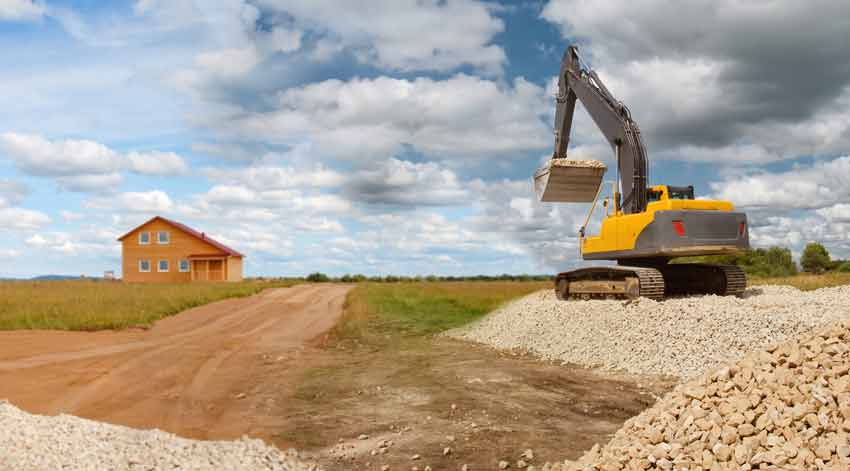
Before the first bucket of soil is moved or the first stake is placed, site grading is one of the most important steps in preparing land for construction. More than just “making the ground level,” grading impacts drainage, soil stability, building longevity, landscaping, and your property’s long-term health.
What proper grading actually does
Grading isn’t about simply flattening a yard. It creates intentional slopes so that water flows away from structures and toward safe drainage zones. Done well, grading protects the foundation, landscaping, and surrounding property.
A good grading plan:
- Directs rainwater away from the home or building
- Reduces runoff and erosion around footers
- Helps prevent wet basements or crawl spaces
- Keeps landscaping from washing out in storms
Homeowners often don’t see bad grading until water starts pooling or foundation cracks appear — by then, the damage is harder and more expensive to fix.
Why grading shouldn’t be a DIY project
A proper grading job requires understanding natural slope, soil composition, drainage paths, and how weather will move water throughout the property. Professionals consider factors such as:
- Existing terrain elevation
- Soil moisture content
- Location of utilities
- Types of structures being installed
Skipping professional grading might feel like a cost-saver, but the risks of erosion, drainage issues, and long-term property damage outweigh what’s saved upfront.
When should grading be done?
Grading usually happens before any construction begins, but in some cases grading is also used after a project to restore proper drainage. Ideal times include:
- When preparing for new home builds
- Before driveway or patio installation
- Before laying footers or foundations
- After excavation work that alters the terrain
When grading is handled correctly from the start, everything else — drainage, landscaping, building foundations — becomes far more reliable and lower-maintenance.