
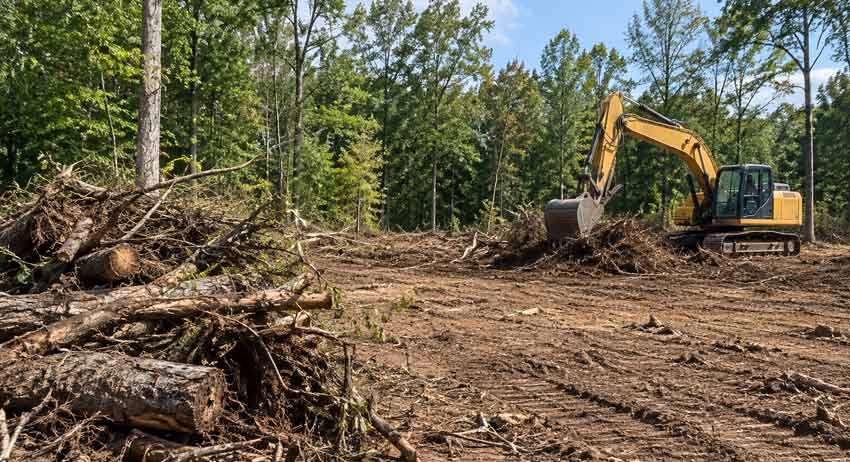
Clearing a piece of property can look fairly straightforward. Remove some trees and brush, clean up the debris, and prepare the ground for whatever comes next.
In reality, proper land clearing requires some planning. What’s above ground is only part of the picture, and decisions made during clearing can affect drainage, erosion, access, and future construction.
Whether you’re preparing for a new building, driveway, additional yard space, or another project, there are a few things worth considering before the equipment starts moving.
Know what you’re clearing for
How a property should be cleared depends largely on what you plan to do with the area afterward.
Preparing a site for construction may require removing trees, stumps, roots, and unsuitable soil. Clearing an overgrown portion of a property for additional usable space may require a much different approach.
Having a clear purpose for the property helps determine how much vegetation needs to be removed and how the ground should be left when the work is finished.
What’s underground matters too
Before excavation or significant land clearing begins, it’s important to know what may be below the surface.
Underground utilities, water lines, septic systems, drainage pipes, and other buried components can all affect where and how work should be performed.
Older properties can be particularly challenging because the exact location of underground lines or previous improvements may not always be obvious.
Identifying these potential obstacles before digging begins can help prevent damage, delays, and unnecessary expense.
Don’t overlook drainage
Removing trees and vegetation can change the way water moves across a property.
Roots and vegetation help absorb water and hold soil in place. Once they’re removed, rainfall may travel differently across the ground, potentially creating runoff, erosion, or low areas where water collects.
That’s why drainage and grading should be considered as part of the clearing process rather than after problems develop.
The goal isn’t simply to clear the land. It’s to leave the property in a condition that works for its intended use.
Trees and stumps require some planning
Removing a tree doesn’t necessarily mean the job is finished.
Depending on what you plan to do with the area, remaining stumps and root systems may also need to be removed. Building, grading, installing a driveway, or establishing a finished lawn over an area can all be affected by what remains below ground.
Large root systems can also leave substantial holes and disturbed soil after removal, which may require additional grading and compaction.
Think about access for equipment
Excavation and land-clearing equipment needs enough room to safely enter, operate, and leave the property.
Fences, narrow driveways, nearby structures, overhead lines, steep terrain, and soft ground can all influence how a project is approached.
Planning equipment access ahead of time can make the work more efficient and help minimize unnecessary disturbance to other areas of the property.
Good preparation makes the next step easier
Land clearing is often the beginning of a larger project rather than the end of one.
Taking the time to consider underground utilities, drainage, grading, root removal, and the property’s eventual use can help create a much better starting point for whatever comes next.
If you’re planning to clear or prepare property for a new project, Little’s Excavating can evaluate the site, handle the excavation and land preparation, and help make sure the ground is ready for the next step.